
Teodora Georgieva: Bulgaria is becoming a driver for energy security in Europe
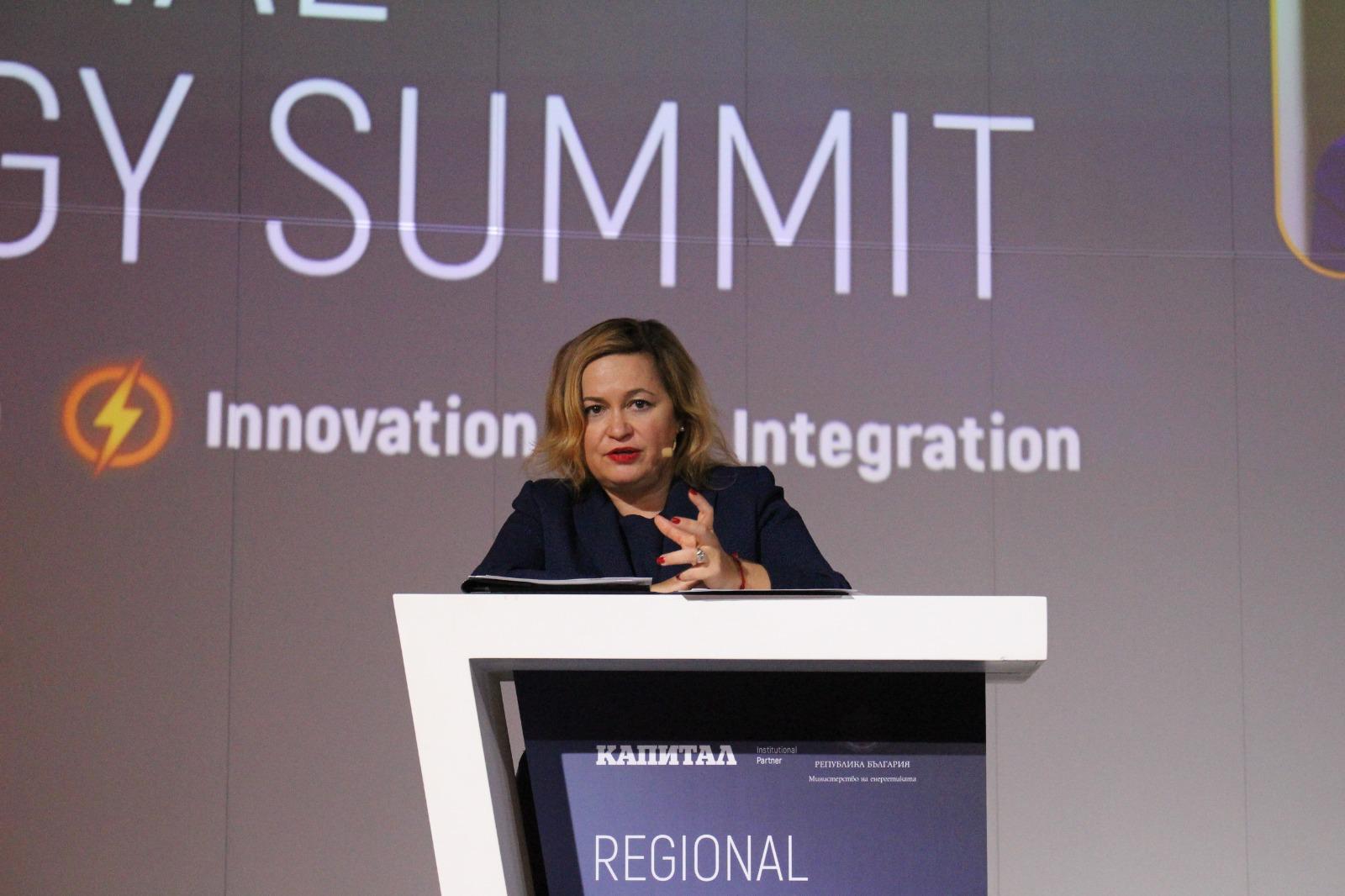
Deputy Minister of Energy Teodora Georgieva participated in the Energy Summit 2026, where she highlighted Bulgaria’s role in Europe’s new energy architecture and the importance of regional connectivity in the face of growing geopolitical uncertainty.
In her speech, she pointed out that Europe has made a strategic turn since 2022, giving priority to LNG supplies over the limited number of pipe suppliers. This choice provided diversification, greater flexibility and the ability to react quickly, but it also posed new challenges. Today, dependence is not on a single supplier, it is on the global LNG cycle, Georgieva stressed, setting the example of supplies through the Strait of Hormuz: ‘When a corridor concentrates around 20% of global LNG trade, it is not a geographical detail, it is a strategic vulnerability.’ In 2025, LNG accounted for nearly 50% of the European Union’s gas imports, making the continent’s energy security increasingly dependent on global routes and supply chains.
Therefore, in the modern world, energy independence does not mean a lack of dependencies, but risk management, Teodora Georgieva believes.
“In today’s world, the one who has the cheapest molecule does not win. The one who manages access, builds trust and creates rules, and turns infrastructure into a security system, wins. Our goal is not just to be a corridor, but to drive change in Europe's energy security," she stressed.
Georgieva pointed out that more than 40% of Bulgaria’s natural gas is supplied by Azerbaijan via the Southern Gas Corridor, a partnership that has ensured stable supplies in the most stressful periods.
According to Deputy Minister Georgieva, the development of the Vertical Gas Corridor is also key for the region, and it is expected to increase the transit capacity by about 50% and in combination with the Southern Gas Corridor to become a strategic supply platform in Southeastern Europe.
It is of the utmost importance that the three main routes of the Vertical Corridor (from Revitusa to Sidirokastro and to Ukraine, from Alexandroupolis to Ukraine and from the Southern Gas Corridor) are continued – this would be a direct response to the crisis, which is fundamental in terms of ensuring competitive supply. This is Bulgaria's contribution to the energy dialogue with its partners for a more competitive environment, Georgieva stressed.
“Bulgaria is no longer the “end of the grid”, but an active participant in the regional energy architecture, working together with the European Commission and the CESEC regional format to strengthen Europe’s energy connectivity and security,” concluded the Deputy Minister.